Cold is our namesake, so we take its failures personally. Warm-fridge calls get the day's first open slots; the $257 from-price covers the full diagnosis and repair labor, with any part quoted separately before it goes in.
From $257 — diagnostic + labor · parts quoted separately · walk away for $93
Slowly warmingFreezer fine, fridge warmSheet of frostPooling waterClicks and humsNever stops runningWarm garage fridge
Refrigeration rewards a methodical hand more than any appliance in the house. The visible symptom — warm milk, frosted wall, wet floor — sits three or four causal steps from the actual fault, and the technician's job is walking those steps with a thermometer and meter instead of skipping to the most profitable conclusion. Our structure keeps that honest: the $257 covers the walking and the wrench time, so the diagnosis has no incentive to inflate itself. Parts enter the conversation only as written, named line items.
The local refrigeration population is distinctive. Central Kitsap kitchens run heavily to French-door units bought during the Silverdale corridor's retail boom, now aging into defrost and fan failures as a cohort. Add the second-fridge culture — garage units near the shipyard, chest freezers in Seabeck outbuildings holding a year of salmon and venison — and a company here had better be fluent in both modern electronics and cold-garage physics. We are, by daily necessity.
From $257 with diagnosis and labor inside the number. Defrost components, fans, relays and gaskets are the everyday parts lines and stay modest. Compressors and sealed-system work are a different economic tier — and when that's the finding, we'll often counsel against the repair in writing, at no more cost to you than the $93 visit.
Worth checking
Before you book
The four-hour rule
A closed refrigerator protects its contents for around four hours; a packed freezer holds a day or more. Don't open doors to check — call, tell us it's a cooling failure, and it moves to the front of the schedule.
Frost where you can see it
Visible frost on the freezer's back interior wall is the defrost system confessing. It's among the most repair-friendly faults a fridge can have, and catching it early keeps the fridge section from ever warming.
The rhythmic click
Click… hum… click every few minutes is the compressor's start relay misfiring. The relay itself is a modest part; the compressor it protects is not. This is the one fridge noise that should skip the wait-and-see phase.
In detail
The longer conversations
Freezer cold, fridge warm — the classic explained
One evaporator makes the cold for both compartments in most household units; a fan and damper share it out. When frost swallows that evaporator or the fan quits, the freezer — closest to the source — stays acceptable while the fridge starves. The repair is usually a defrost component or the fan, both ordinary parts lines. The pattern is so common in the French-door cohort around Silverdale that we stock for it as a default.
Water on the floor, ranked by seriousness
Ranked from likely to grave: a defrost drain iced or clogged (routine), a blocked condensate path dripping inside (routine), the ice maker's supply fitting weeping (matters — shut the line), or door gaskets sweating in humid months (maintenance). The puddle's location lies about its source more often than not; we trace it with panels off before naming the part.
The sealed-system boundary, stated plainly
Compressor, condenser, evaporator and the refrigerant loop form the sealed system. Faults there mean recovery, brazing and recharge — heavy work with a heavy parts-and-process line. On a young premium unit it can be justified; on a mid-market fridge past its first decade it almost never is, and our written finding will say so without hedging. The $93 you'd spend to learn that beats the $700 you might spend not learning it.
Garage and outbuilding refrigeration, Kitsap edition
An unheated Kitsap garage spends winter below the operating floor many refrigerators were designed for. The thermostat, reading a cold room, stops calling for cooling — and the freezer compartment quietly thaws. Sometimes a heater kit solves it; sometimes the unit is simply the wrong tool for the space, and we say so. Bremerton basements, Seabeck barns and Keyport shops each get this conversation regularly.
How we schedule a food emergency
Say 'not cooling' when you call and the dispatcher treats it as perishable — first honest opening, usually inside a business day for the Silverdale–Poulsbo–Bremerton triangle. The visit follows standard structure: diagnosis and labor inside the from-price, parts written separately, and the $15 form coupon applies to the completed repair like any other.
FAQ
Short answers
How much is fridge repair in Bremerton?
From $257 covering diagnosis and repair labor; parts are listed separately on the written quote. A declined repair closes at the $93 visit fee.
How fast can you reach a warm fridge?
Cooling failures take scheduling priority — typically the next honest opening, often same or next business day within our core triangle. You'll get the real window on the phone, not a slogan.
Do you work on chest freezers?
Yes — uprights and chests, kitchen and garage, including the hunting-season fleet in the county's outbuildings. Same pricing structure applies.
Is a 12-year-old refrigerator worth repairing?
For fans, relays, defrost parts and gaskets — often yes. For sealed-system faults — usually no, and our written finding will give you that answer plainly enough to shop with confidence.
$15 OFFANY COMPLETED REPAIR
Code RIDGE15 — say it or send it
Mention it on the phone or use the booking form, where it's attached automatically. One per visit; applies to the repair itself, not to the $93 diagnostic-only outcome.
Field notes
What the visits look like
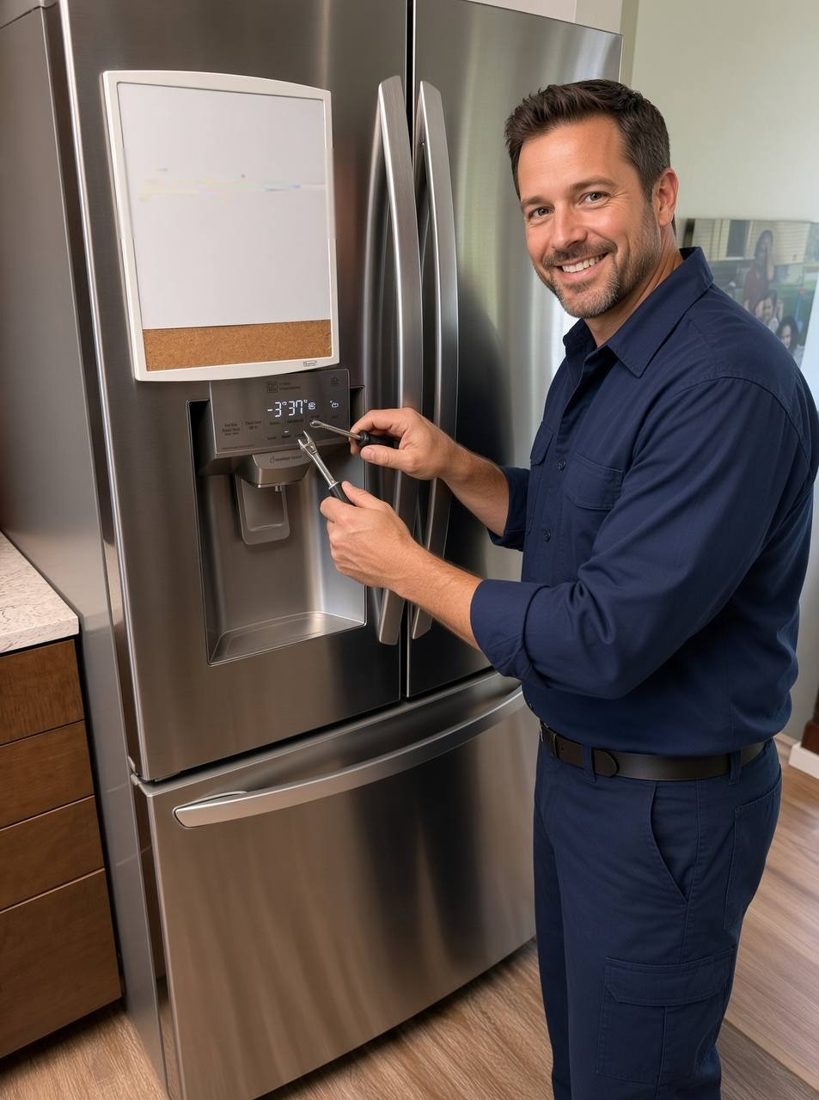
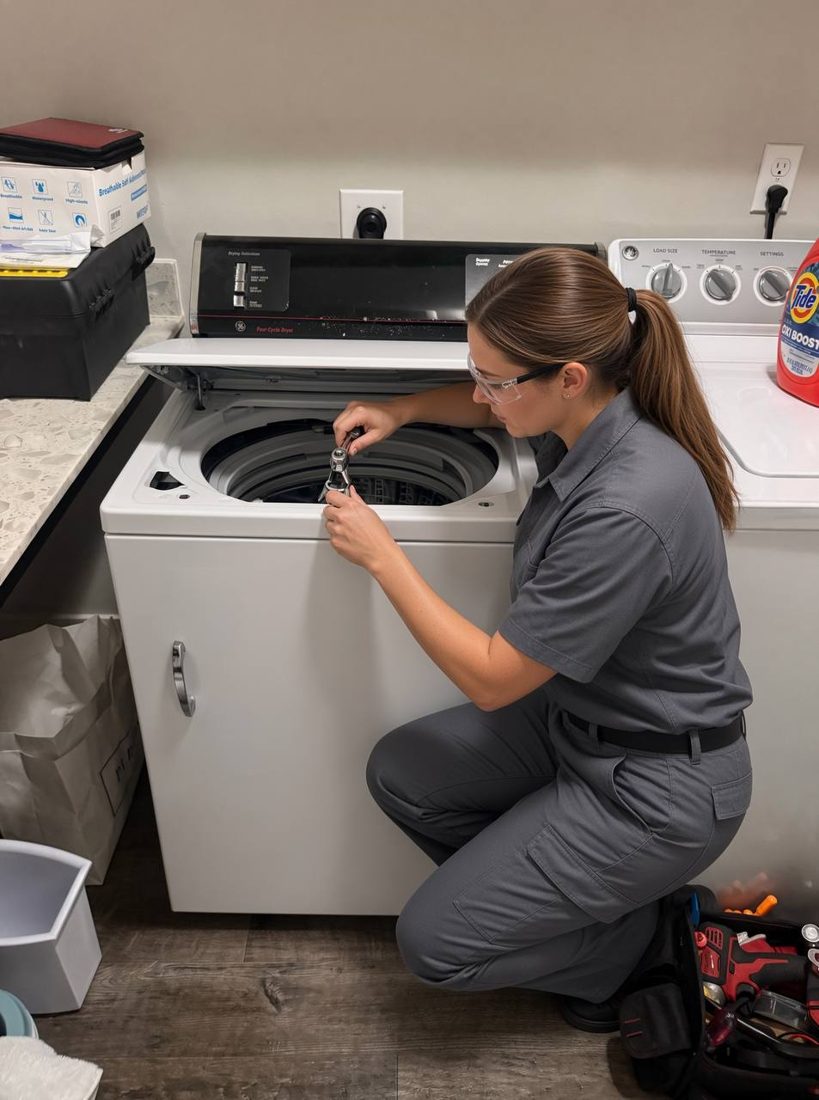
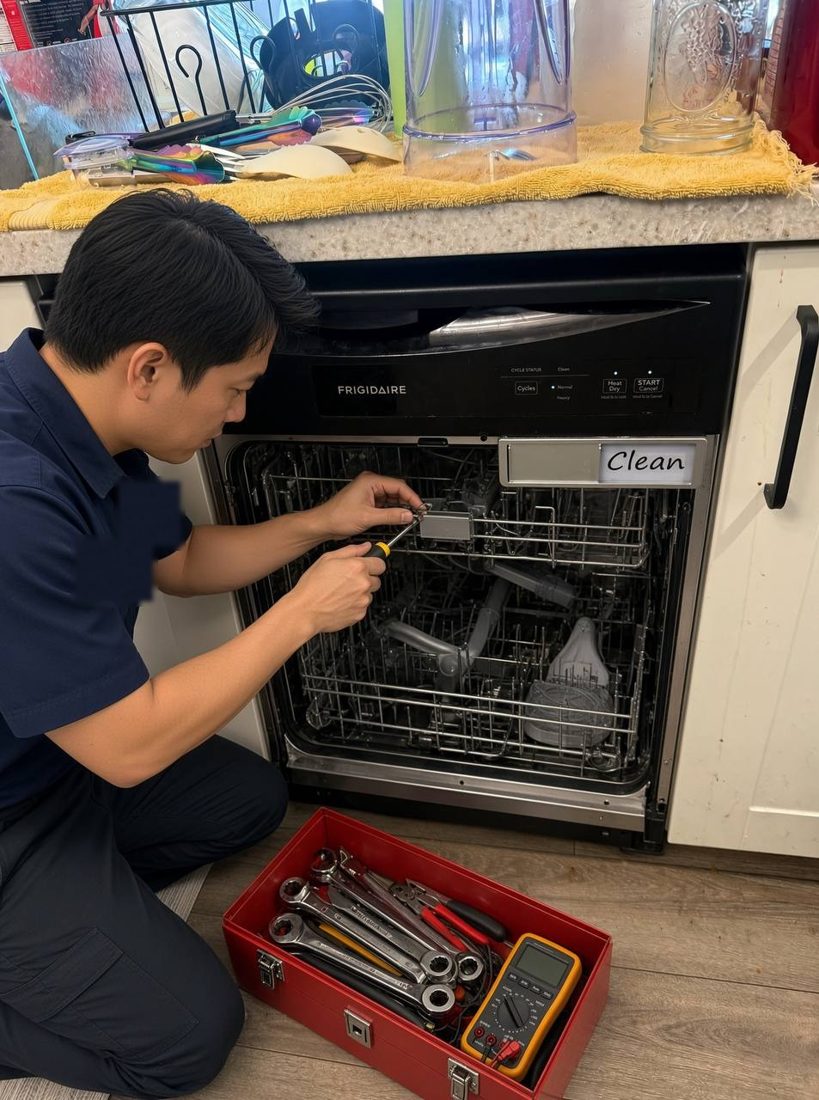
Three frames from the route — the machines opened, the meters out, the findings headed for paper.
French-door refrigerator on the bench call — dispenser and control diagnostics before any part gets named.Top-load washer, lid up, drive components out — the parts line gets written only after this look inside.Built-in kitchen work in an older Bremerton house — tight quarters, patient hands, meter within reach.
Book a refrigerator & freezer repair visit
Silverdale, Poulsbo, Bremerton and the edges — from-price confirmed at booking, $15 off the completed repair through this form.
✓ One number covers diagnostic + labor✓ Parts itemized separately, in writing✓ $15 off with code RIDGE15